Refinement of Anatomical Expertise: A Collaborative Journey in Functional Anatomy

Updated: Jun 11
Duration
August 2025 – February 2026
Overview
From August 2025 to February 2026, I participated in an intensive Functional Anatomy Study Group alongside a dedicated cohort of peers. This seven-month initiative was designed to bridge the gap between theoretical anatomical knowledge and practical clinical application. By integrating academic review with hands-on palpation practice, the program aimed to cultivate a deeper understanding of the human body’s structural and functional complexities.

Core Curriculum and Methodology
The study was systematically structured to cover the body by region, ensuring a comprehensive grasp of the musculoskeletal system. Our weekly sessions were divided into three primary pillars:
Structural Foundations: We conducted in-depth reviews of muscular origins, insertions, and innervation. Understanding these precise attachment points served as the baseline for predicting movement patterns and force vectors.
Functional Mechanics and Pathology: Beyond mere identification, we analyzed the kinesiology of each muscle group. We explored how these structures contribute to global movement and, conversely, how specific dysfunctions lead to common clinical pathologies.
Surface Anatomy and Palpation: To translate theory into tactile skill, we engaged in extensive palpation labs. Using anatomical markers, we practiced "living anatomy" by drawing muscle boundaries and bony landmarks directly on one another. This practice was essential for developing the "clinical touch" required for accurate assessment and treatment.
Clinical Mentorship and Advanced Insights
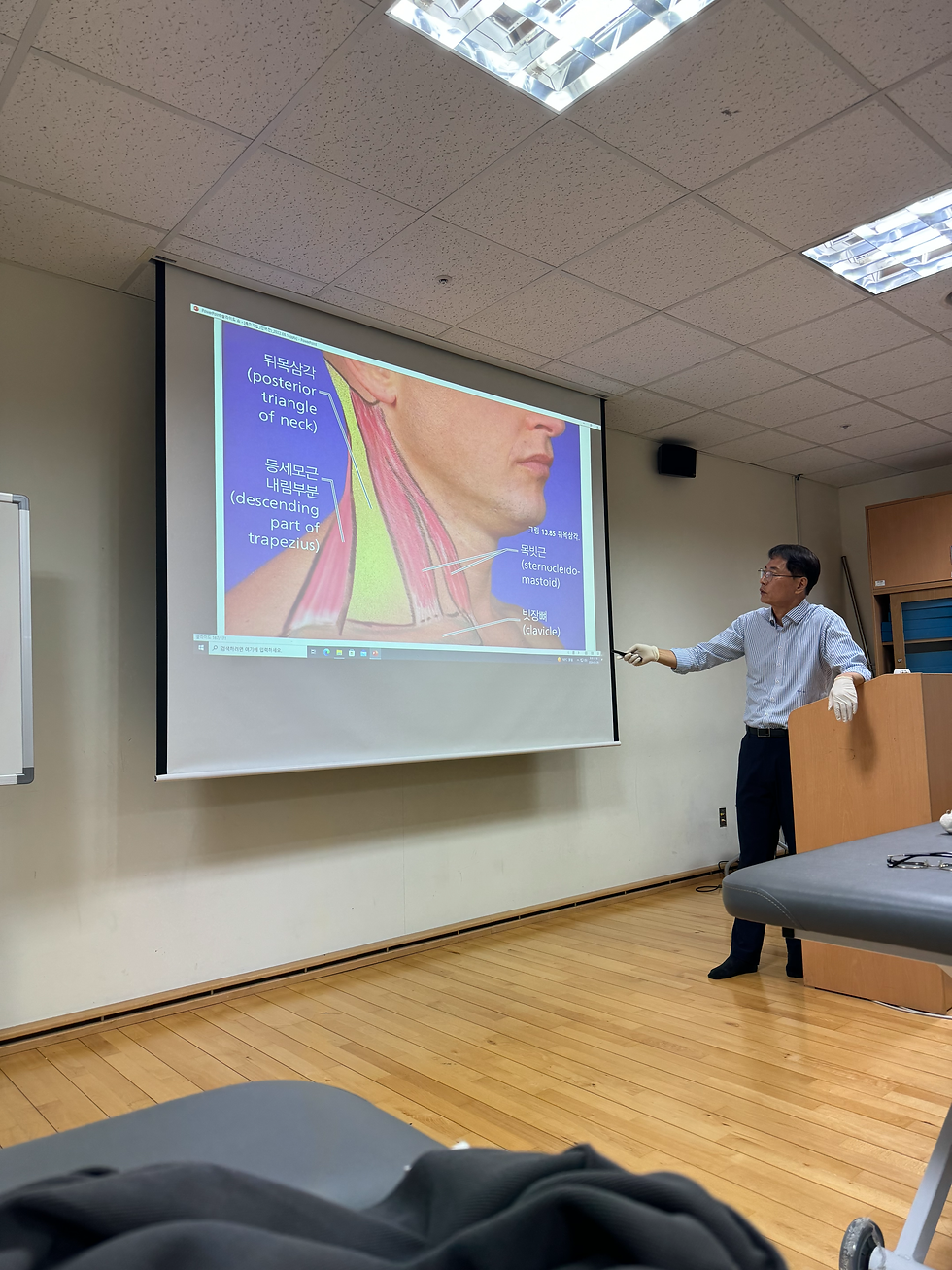
A distinguishing feature of this study group was the active involvement of our attending professor. The transition from student-led discussions to expert-guided mentorship provided invaluable depth to our learning.
The professor shared extensive clinical case studies and empirical insights that are often absent from standard textbooks. By observing the professor’s diagnostic reasoning and palpation techniques, we learned to identify subtle tissue changes and compensatory patterns. This mentorship transformed our sessions from a standard review into a high-level clinical seminar, fostering a more nuanced perspective on patient care and physical evaluation.
Conclusion and Professional Growth
The conclusion of this study in February 2026 marked a significant milestone in my professional development. It was not merely an academic exercise but a rigorous preparation for clinical excellence. This collaborative environment allowed us to challenge one another, refine our manual skills, and internalize the complexities of functional anatomy.
I am confident that the depth of knowledge and the practical skills acquired during these seven months will serve as a robust foundation for my future practice, enabling me to provide more precise, evidence-based care for my clients and patients.


Comments